

June 2012
Saturday 30th
Michael Bird reports:-
A newly emerged Black-tailed Skimmer Orthetrum cancellatum was seen near the big fence. Numerous Ringlet Aphantopus hyperantus were in St Catherine's Field and a few were also in Hawthorn Field and along Willow Bank. Several unidentified dragonflies were over the delph in St Catherine's Field. From Cottage Drain hide a 1 metre long Grass Snake Natrix natrix was seen swimming across the pool. 2 Emperor Dragonfly Anax imperator and several Four-spotted Chaser Libellula quadrimaculata were in front of the hide. A stag Roe Deer Capreolus capreolus was seen near Beeston plantation. A male Banded Demoiselle Calopteryx splendens was on Mother Drain near Sedum House.
Thursday 28th
MOTH TRAPPING REPORT FOR WEDNESDAY NIGHT, 27 JUNE, 2012
A warm night was forecast for Wednesday night, 27 June and so I decided to run the moth trap once more. This was more like it! A total of 77 species were trapped and identified, a vast improvement on recent disappointing totals and more typical of the numbers one might expect in late June.
The star find was a single Coleophora binderella which, subject to confirmation, represents the first Yorkshire record of this species since Victorian times. The Coleophoridae are species of microlepidoptera which have case-bearing larvae. Coleophora binderella is a nationally local species associated with alder, hazel or birch. The complete absence of Yorkshire records since the Victorian age makes this an important discovery. I have to thank the Yorkshire Recorder for Microlepidoptera, Harry Beaumont, for help in identifying this one.
Whilst there were no other new records, there were plenty of colourful and attractive species to enjoy, including Elephant Hawk-moth Deilephila elpenor , Buff-tip Phalera bucephala, Peach Blossom Thyatira batis , Figure of Eighty Tethea ocularis , Blotched Emerald Comibaena bajularia and Burnished Brass Diachrysia chrysitis . Among the microlepidoptera, there were a few less common species such as Epermenia falciformis and the Pyralid, Calamotropha paludella , plus many more common ones, for example, the Tortricids, Pandemis cerasana and Agapeta hamana .
Ian Heppenstall Moth Recorder
Left, Buff-tip Phalera bucephala and right, Burnished Brass Diachrysia chrysitis both images © Ken Woolley


Left, Blotched Emerald Comibaena bajularia and right, Elephant Hawk-moth Deilephila elpenor both images © Allan Parker ARPS
Tuesday 26th
Photographed on Hawthorn Field by Barry Wardley this afternoon and a new species for the Reserve is this pair of Lunar Hornet Moth Sesia bembeciformis mating.

Lunar Hornet Moth Sesia bembeciformis
Ian Heppenstall comments ' The photo is a stunning one of a copulating pair, with the female on the right. It is, as you thought, a new record for the reserve. The moth is likely to be well established on the reserve. It is not that uncommon but is rarely seen and difficult to record because it emerges early in the morning, flies in the daytime, looks a bit like a large wasp and doesn't visit flowers. The larvae feed internally in Salix species'.
John Hancox reports:-
"One or two summer species are now starting to appear. There were a small number of Ringlets Aphantopus hyperantus reported including one at Loversall Delph. The Loversall Bank transect yielded only two butterflies, both Speckled Wood Pararge aegeria compared with 54 counted at the same time last year. At the small pond in Loversall Field there was an immature male Emerald Damselfly Lestes sponsa (see image). Other species seen included a number of spiders, possibly Pardosa monticola , each carrying an egg sac on the abdomen (see image) and a number of Harlequin Ladybirds Harmonia axyridis ; a larva is pictured alongside a ready food supply - also a mature insect seen nearby (see images)! In the next week or so, look out for the first Gatekeepers Pyronia tithonus often the most common butterfly in July. It will be interesting to see how this species has fared since butterfly numbers are still well down on last year which itself wasn't a good year."


Left, Spider possibly Pardosa monticola with egg sac and right, Emerald Damselfly Lestes sponsa both images © John Hancox


Harlequin Ladybird Harmonia axyridis, left adult and right larva both images © John Hancox
A Water Shrew was in the western end of Division Drain swimming and diving and showing well any future sightings would be appreciated
Still a dearth of butterflies on the Reserve with a total of 14 reported to me (including my own sightings). These were 5 Speckled Wood Pararge aegeria ; 1 Green Veined White Pieris napi ; 3 Ringlet Aphantopus hyperantus (see image); 1 Comma Polygonia c-album ; 1 Meadow Brown Maniola jurtina ; 1 Large Skipper Ochlodes venatus ; 1 Orange Tip Anthocharis cardamines and 1 Brimstone Gonepteryx rhamni . With thanks to all reporters.
Other images taken included a
Snail
Monacha cantiana
,
Hedge Woundwort
Stachys sylvatica
,
Musk Thistle
Carduus nutans
, now in flower and
Common Bird's-foot Trefoil
Lotus corniculatus
(see images).
(Ken Woolley).


Left, Ringlet Aphantopus hyperantus and right Snail Monacha cantiana both images © Ken Woolley

Hedge Woundwort Stachys sylvatica © Ken Woolley


Left, Musk Thistle Carduus nutans and right Common Bird's-foot Trefoil Lotus corniculatus both images © Ken Woolley
Derek Bateson reports:-
'Only two Musketeers were on parade today, but parted company after about half an hour. In that time I photographed the very pretty umbellifer, Hogweed Heracleum sphondylium with tiny individual ink flowers (see image). I then moved to Cottage Drain where carnage had broken out. First of all the Spider Tetragnatha extensa had removed the head of a damselfly and was enjoying a meal (see image). Close by I noted another Blue-tailed damselfly Ischnura elegans form rufescens which was itself was engaged in disposing of a large fly (see close-up image). Nettles Urtica dioica held a variety of plant bugs including Mirid Bugs Dereaocoris ruber and Grypocoris stysi (see images), together with two other bug nymphs as yet unidentified (images). Two very different flies caught my eye but again I am working on ID’s for these. Finally, an almost perfect Dandelion Taraxacum officinale seed head , made up my morning (see image).
However, the best find of the day want to Barry Wardley who came to me at lunchtime with a picture of a ‘hornet’. I looked at a couple of images and decided it was one of the Clearwing moths. When I reached home I determined this as the Lunar Hornet Clearwing Sesia bembeciformis, new to the Reserve. To my chagrin as I had to leave for a meeting in Sheffield, a number of photographers were able to obtain images and Barry managed a superb shot of a mating pair.’


Left, Hogweed Heracleum sphondylium and right, Spider Tetragnatha extensa feeding on damselfly both images © Derek Bateson


Blue-tailed damselfly Ischnura elegans form rufescens feeding on fly both images © Derek Bateson


Left, Mirid Bug Dereaocoris ruber and right, Mirid Bug Grypocoris stysi both images © Derek Bateson

Dandelion Taraxacum officinale seed head © Derek Bateson
Michael Bird reports:-
A buck Roe Deer was seen in Loversall Carr Fields early today in the wheat. A pair of clear wing moth seen and photographed, by lots, on Hawthorn Field (se image and report above). A Banded Demoiselle Calopteryx splendens was seen on Mother Drain and photographed by RM,BW. There is lots of Fox and Cubs (Orange Hawkweed) Pilosella aurantiaca on along Willow Bank this year.
Sunday 24th
Derek Bateson reports:-
'The day started overcast but brightened up later and I was the only Musketeer on parade. Everything was soaked from heavy overnight rain so I confined my searches to the waste ground and car park areas. No Banded Demoiselle Calopteryx splendens showed, and only a relatively small number of Blue-tailed Damselfly Ischnura elegans were seen. Aphids of indeterminate species were populating many thistles (see image). Two Scorpion Fly Panorpa communis were noted also some five species of hoverfly. I then found the rather colourful gall Psyllopsis fraxini on Ash together with another on Salix which is awaiting determination. The Micro-moth Celypha lacunana (see image) was flitting around, and I captured images of this together with Blood-vein Timandra griseata see (see image), deep inside a bush. Next up was the Potato Capsid Bug Closterotomus norwegicus (see image), plus several Sloe Bug and Snipe Fly. I was puzzled by a small Soldier Fly which has since been confirmed as Beris geniculata (see images). This was nearly all black with a metallic green thorax, and behind this, the scutellum shows six rather fearsome dinosaur-like projections which can be clearly seen in the close-up. I am not sure but this may be a new species for the reserve. Dung Fly too were numerous and were inactive because of the weather. I finally finished my photographic stint with a Teasel Dipsacus fullonum (see image), sculpture shot’.

Aphids © Derek Bateson


Left, Micro-moth Celypha lacunana and right, Blood-vein Timandra griseata © Derek Bateson

Potato Capsid Bug Closterotomus norwegicus © Derek Bateson


Soldier Fly Beris geniculata © Derek Bateson

Teasel Dipsacus fullonum © Derek Bateson
Saturday 23rd
During a walk round the Reserve today Sean Edwards photographed Bee Orchid Ophrys apifera , Southern Marsh Orchid Dactylorhiza praetermissa and Giant Puffball


Left, Bee Orchid Ophrys apifera and right, Southern Marsh Orchid Dactylorhiza praetermissa both images © Sean Edwards

Giant Puffball Calvatia gigantea © Sean Edwards
Thursday 21st
Below are two images taken recently on the Reserve by Ron Stock and show a pair of Azure Damselfly Coenagrion puella mating, plus two more images from Tuesday showing Dog Rose Rosa cannina with a White-lipped Banded Snail Cepaea hortensis and a Common Green Shield Bug Palomena prasina which this 'summer' has lived up to the common part of it's name.


Azure Damselfly Coenagrion puella left, mated pair and right mated pair in 'wheel position' both images © Ron Stock


Dog Rose Rosa canina and White-lipped Banded Snail and right Common Green Shield Bug Palomena prasina both images © Allan Parker ARPS
Wednesday 20th
Below are some more images, from our resident botanist Ken Woolley, taken yesterday on the Reserve


Left, Wild Strawberry Fragaria vesca and right, White Bryony Bryonia dioica © Ken Woolley


Left, Russian Comfrey Symphytum x uplandicum and right, Water Figwort Scrophularia auriculata © both images Ken Woolley
Tuesday 19th
Derek Bateson reports:-
‘Last Sunday, I found and photographed, what I believed at the time, was a new hoverfly for the Reserve, Eristalinus aeneus which was strange as it normally feeds on seaweed! I qualified my ID with the proviso that I was checking this. I consulted two experts, and we now all agree that it was Eristalinus sepulchralis, a very similar species with spotted and hairy eyes, which I have found here before’.
‘ Today was a very warm and sunny day and the regular photographers split into two groups with Grumpy One and myself and minder, setting off along Loversall Bank. John Hancox soon found the Longhorn Beetle Leptura maculata , which we both photographed (see image) . I then stopped off at Willow Marsh promontory and immediately found the moths Silver Y Autographa gamma and Cinnabar Tyria jacobaeae (see images). Further along Loversall Bank I photographed a small group of Common Spotted Orchid Dactylorhiza fuchsii . A Speckled Wood butterfly in pristine condition, refused to pose, but in brambles near Loversall Pool I found two caterpillars of the Yellow-tail Moth Euproctis similis (see image), which everyone later photographed. I sighted one Broad-bodied Chaser Libellula depressa on Loversall Delph, but no other dragonflies although I understand John found Black-tailed Skimmer in the RBF ponds. Nothing much else was seen until we returned along Loversall Bank where AP/KW had found a second Longhorn species, Strangalia quadrifasciata (see image) which we all photographed.
All the ‘blue’ damselflies were much in evidence, but no demoiselles near the Pumping station, so I had to be satisfied with the yellow Rape flower Brassica napus’.
John Hancox reports:-
We visited the Reed Bed Filtration Ponds, cells C/D and the first thing we saw was a very nice male Roe Deer
Capreolus capreolus
which walked across in front of us about 6 m away and seemed very unconcerned before moving into the bushes! We then counted around 40 of each species Southern Marsh Orchid
Dactylorhiza praetermissa
and Bee Orchid
Ophrys apifera
, but most weren't in very good condition. There was also lots of Yellow-wort
Blackstonia perfoliata
but only one or two were yet in flower.
Also on the cells there were a female Black-tailed Skimmer
Orthetrum cancellatum
and a Four-spotted Chaser
Libellula quadrimaculata v. praenubila
. On the ponds in Loversall Field, there were two Four-spotted Chaser
Libellula quadrimaculata
and a male and female Broad-bodied Chaser
Libellula depressa.
In the vegetation along the path-sides, there were a few Azure
Coenagrion puella
, Common Blue
Enallagma cyathigerum
and Blue-tailed
Ischnura elegans
damselflies. Only four butterflies were seen - a Green-veined White
Pieris napi
, a late male Orange Tip
Anthocharis cardamines
and two Speckled Wood
Pararge aegeria
.
Allan Parker and Ken Woolley report:--
Much the same as the above reports but we had single male and female Banded Demoiselle Calopteryx splendens near the Pumping Station neither were co-operative with the temperature well up everything was quite flighty. We then proceeded along Willow Bank and here Ken found a Longhorn Beetle Strangalia quadrifasciata which was very sluggish and still present when the above two contributors returned. Both Sloe Bug Dolycoris baccarum and Common Green Shield Bug Palomena prasina were found. A Spider probably Pisaura mirabilis was carrying out some sort of display on a leaf in Loversall Delph and allowed several images to be taken. Our butterfly numbers reached the dizzy peak of five consisting of two Speckled Wood Pararge aegeria along Loversall Bank, a single Peacock in Loversall Delph and singles of Green-veined White Pieris napi and Orange-tip Anthocharis cardamines the latter being a male, both near the 'dragonfly' ponds in Loversall Field. The 'dragonfly' ponds had two male Broad-bodied Chaser Libellula depressa and four Four-spotted Chaser Libellula quadrimaculata all active over the ponds. Present in the smaller of the two ponds were two female and a male Common (Smooth) Newt Triturus vulgaris . We also noted numbers of pond snail, several diving beetle, Water Boatman Notonecta glauca and Pond Skater Gerris lacustris . We then checked out the orchids between Cells C and D and found numerous Southern Marsh Orchid many were hiding in the Birch scrub and reeds, Bee Orchid Ophrys apifera were best described as being mainly past their sell by date but a nice find were two Pyramidal Orchid Anacamptis pyramidalis . All in all not a bad morning but the low butterfly and dragonfly numbers must given cause for concern (see note from Ken). Ken later had a Bank Vole Clethrionomys glareolus on Hawthorn Bank. Ken says mammals must be one of the least recorded species on the Reserve, he can only think of fish being recorded less.
Additional report by Ken Woolley :- 'Butterfly sightings remain at a abysmally low level on the Reserve. Today's records have been a total of 12 butterflies of 4 species reported by 4 people. Surely it can only improve. All records, will be passed to John Hancox for inclusion in the Potteric Carr and Butterfly Conservation database'.


Left, Longhorn Beetle Strangalia quadrifasciata © Allan Parker ARPS and right Longhorn Beetle Leptura maculata © Derek Bateson


Left, Yellow-tail Moth Euproctis similis © Allan Parker ARPS and right, Cinnabar Moth Tyria jacobaeae © Derek Bateson


Left, Spider probably Pisaura mirabilis and right, Pyramidal Orchid Anacamptis pyramidalis both images © Allan Parker ARPS


Left, Common Blue Damselfly Enallagma cyathigerum feeding on small fly © Ken Woolley and right, Silver Y Moth Autographa gamma © Derek Bateson
Monday 18th
MOTH TRAPPING REPORT FOR SATURDAY NIGHT, 16 JUNE, 2012
After last week’s poor results, I hoped for a better outcome when I ran the moth trap again on Saturday night, 16 June. The total catch of 29 species was an improvement on the previous week but a long way short of the 77 species recorded on the 15 June last year. Vine’s Rustic Hoplodrina ambigua, and Marbled White Spot Protodeltote pygarga were the best of the bunch. Swallow Prominent Pheosia tremula , Peppered Biston betularia , Light Emerald Campaea margaritata , Foxglove Pug Eupithecia pulchellata , Heart and Dart Agrotis exclamationis and the Pyralid, Udea olivalis were among the more common species recorded.
Ian Heppenstall Moth Recorder


Left, Swallow Prominent Pheosia tremula and right, Foxglove Pug Eupithecia pulchellata © both images Derek Bateson


Left, Heart and Dart Agrotis exclamationis and right, Pyralid, Udea olivalis © Derek Bateson
Sunday 17th
Derek Bateson reports:-
'Our aeronauts were away again today so Grumpy One and the writer helped Ian with the moth trap where the catch was somewhat disappointing although there were a few Caddis to keep me occupied. We then combed the waste ground for Banded Demoiselle, without success although another visitor had seen a male on Loversall Bank. All three ‘blue’ Damselfly were present in some numbers. Many of the 7-spot ladybird larvae, Propylea 7-punctata, had pupated (see image). Close by, I saw my only butterfly of the day, a Green-veined White Artogeia napi , then more nymphs of the Common Green Capsid Bug Lygocoris pabulinus (see image). This was followed by the Elaterid Click Beetle Denticollis linearis (see image), kindly determined by Bob Marsh. Next up were some more Snail Monacha cantiana (see image), which are appearing more regularly. My next was a star find in the old Warden’s Car Park. I couldn’t identify it with certainty on site, but on the computer later, this appears to be Eristalinus aeneus, (see image), a completely new species for the Reserve, and a good find. This is quite an interesting and distinctive species in that it has ‘hairy’ eyes (when seen under a microscope), but more significantly the eyes are spotted, and this feature can be clearly seen in the image. I have asked the YNU Diptera recorder to confirm my ID. (now confirmed as Eristalinus sepulchralis ).
I then turned over a few Blackberry leaves and photographed some of the aphids I found there. It’s difficult to tell but they are likely to be Rose Aphid Macrosiphum rosea, and the image shows both winged and wingless specimens (see image). Behind the Compound I found an interesting grass which I think is Timothy or Cat’s-tail Phleum pratense (see image). Ken Woolley will probably put me right on this in due course. The bonus was the mosquito perched on it. Ian Heppenstall later reported a find of a considerable number of Bee Orchid Ophrys apifera in the RBFS, a site not noted for this species’


7-spot ladybird larvae, Propylea 7-punctata and right, Common Green Capsid Bug Lygocoris pabulinus © both images Derek Bateson


Click Beetle Denticollis linearis and right, Snail Monacha cantiana © both images Derek Bateson


Hoverfly Eristalinus sepulchralis © Derek Bateson


Left, probable Rose Aphid Macrosiphum rosea and right, Timothy or Cat’s-tail Grass Phleum pratense © both images Derek Bateson
Ian Heppenstall reports:-
This morning, I checked the colony of Southern Marsh Orchid Dactylorhiza praetermissa and was surprised and delighted to come across at least 45 Bee Orchid Ophrys apifera towards the eastern end of the bank, roughly half on the bank top and half on the south facing slope. They were all in the same general area. As far as I am aware this is a new location for Bee Orchid Ophrys apifera , unless, of course, anyone else has seen them here before. It is hard to imagine that they have all just appeared this year. (John Hancox thinks he had one or two there last year, when checking the Southern Marsh Orchid colony but not that many).
PLEASE NOTE: This is in an area not open to the general public.

Bee Orchid Ophrys apifera © Allan Parker ARPS
Saturday 16th
More images from last Tuesday show Spotted Cranefly Nephrotoma appendiculata one of several Cranefly species currently active on the Reserve, Banded Demoiselle Calopteryx splendens usually found in small numbers around Mother Drain , 7-spot Ladybird Coccinella 7-punctata larvae, currently both adults and larvae can often be found on Stinging Nettle Urtica dioica leaves where they are looking for aphids to feed on and Rough Sow-thistle Sonchus asper is in flower on the more waste ground areas. The Cuckoo Bee Nomada flava is still about in good numbers and some of the Wood Avens have now flowered and gone to seed


Left, Spotted Cranefly Nephrotoma appendiculata and right Banded Demoiselle Calopteryx splendens both images © Allan Parker ARPS


Left, 7-spot Ladybird Coccinella 7-punctata larvae and right, Rough Sow-thistle Sonchus asper both images © Allan Parker ARPS


Left, Cuckoo Bee Nomada flava and right Wood Avens Geum Urbanum seed head both images © Ken Woolley
Friday 15th
Below is an image of a Ground-bug Scolopostethus thomsoni (ID per Jim Flanagan) with prey. It's a good example of ground-bug predation on aphids or similar prey, almost invariably on nettles as this was. The rostrum (part of the mouthparts), can be seen inserted into the aphid for extracting the juices (Derek Bateson).

Ground-bug Scolopostethus thomsoni feeding on prey © Derek Bateson
Thursday 14th
More images from this week show Red Clover Trifolium pratense which is now much reduced on the Reserve, Southern Marsh Orchid Dactylorhiza praetermissa , Hawthorn Shieldbug Acanthosoma haemorrhoidale , and Tree Bumble Bee Bombus hypnorum probably a worker bee.


Left, Red Clover Trifolium pratense © John Hancox and right, Southern Marsh Orchid Dactylorhiza praetermissa © Ken Woolley


Left, Tree Bumble Bee Bombus hypnorum and right, Hawthorn Shield Bug Acanthosoma haemorrhoidale both images © Glyn Hudson
Wednesday 13th
Derek Bateson reports:-
Below is an image of a gall taken about a week ago on Cottage Drain. I have had it checked by Tom Higginbottom and the orange pustules are a micro-fungi gall causer Puccinia urticata. I thought it had been caused by a wasp or fly, which is why I couldn't find it in Margaret Redfern's book. The second picture also shows a Pysillid fly which I thought might be the causer, but it isn't I only spotted it when the image was on screen as it's really tiny.


Left, Micro-fungi Gall Puccinia urticata © John Hancox and right with Pysillid Fly © Derek Bateson
Tuesday 12th
Allan Parker / Ken Woolley report:-
After leaving Derek we had a walk along Hawthorn Bank which proved to be far less productive than the previous Sunday. We found and photographed Soldier Beetle Cantharis rustica . White Campion S ilene latifolia , Red Campion Silene dioica and Bladder Campion Silene vulgaris were all in flower along the Bank.
After lunch we rechecked the area around the Access Track next to the Pumping Station which proved to be more productive than Hawthorn Bank. Here we found a gathering of at least eight Sloe Bug Dolycoris baccarum . The Longhorn Beetle Agapanthea villosoviridescens was still present along with several 7-spot Ladybird Coccinella 7-punctata larvae. We then went down to Black Carr Field to checkout the Fox and Cubs (Orange Hawkweed) Pilosella aurantiaca reported to us by Brian Buckle, Michael Bird and Dave Forbes. On our way back along 'Butterfly Alley' we found four more Longhorn Beetle Agapanthea villosoviridescens . Yet again we saw no dragonfly or butterfly species at all, very disappointing!!


Left, White Campion S ilene latifolia and right Red Campion Silene dioica © Allan Parker ARPS


Left, Soldier Beetle Cantharis rustica and right, Sloe Bug Dolycoris baccarum both images © Allan Parker ARPS


Left, Fox and Cubs (Orange Hawkweed) Pilosella aurantiaca and right, Longhorn Beetle Agapanthea villosoviridescens both images © Allan Parker ARPS
Derek Bateson reports:-
'The three stalwarts who were expecting to empty the Moth trap (AP had got his wires crossed again) were joined by Grumpy One and later by Glyn Hudson who thought he had camera problems earlier, quickly fixed by a little education by Harrison Cameras.
We made for the waste ground again where I spotted a male Banded Demoiselle Calopteryx splendens which was too cold to move and wasn’t in the most photogenic position, but we all photographed it (see image). More Flower Beetle Oedemeria lurida (see image) and Malachite Beetle Malachius bipustulatus were also present, plus a Common Green Capsid Bug nymph Lygocorus pabulinus (see image). I then found a large specimen of the Longhorn Beetle Agapanthea villosoviridescens (see image) which made a nice shot. Also note was a Spotted Cranefly Nephrotoma appendiculata. There were good numbers of the blue damselfly about and these included Blue-tailed Damselfly Ischnura elegans with forms rufescens and violacea present (see images) Moving towards the underbridge I was attracted by a rather strange bud on a thistle, and after much deliberation by the three of us, we felt it was probably Spear Thistle Cirsium vulgare (now confirmed as Musk Thistle Carduus nutans) (see image) which produced an attractive picture . We then split up and I went to Black Carr Field which was cold and lifeless except for a brood of day-old (?) Pheasant chicks. On the way back to the Field Centre, I found a very co-operative Yellow Dung Fly Scathophaga stercoraria which allowed quite a good shot’.


Left, Banded Demoiselle Calopteryx splendens © Allan Parker ARPS and right, Flower Beetle Oedemeria lurida Derek Bateson


Left, Common Green Capsid Bug nymph Lygocorus pabulinus and right, Longhorn Beetle Agapanthea villosoviridescens both images © Derek Bateson


Blue-tailed Damselfly Ischnura elegans left, form rufescens and right, form violacea both images © Glyn Hudson

Musk Thistle Carduus nutans Spear © Derek Bateson
A Lime Hawk-moth Mimas tiliae found today by Brian Buckle and Dave Forbes near Willow Pool Hide.

Lime Hawk-moth
Mimas tiliae
© Ken Woolley
Sunday 10th
MOTH TRAPPING REPORT FOR SATURDAY NIGHT, 9 JUNE, 2012
Moth trapping on Saturday night (9 June) was notable only for the paucity of both numbers and species of moths. The total of 18 species recorded was way below the 50+ species that would be normal for this time of year. The reason, of course, is the very cool and wet weather that we have been experiencing for much of the spring and summer to date. Temperature is the main factor affecting moth numbers and until we experience a warm and settled spell, I do not expect the trapping results to improve significantly.
Of the 18 recorded species, the only noteworthy one was the small Tortricid, Cochylis nana. The first Potteric record of this fairly common and widespread species was earlier this year, on 24 May. Green Silver-lines Pseudoips prasinana was certainly the most attractive moth trapped and Poplar Hawk-moth Laothoe populi, the largest.
Ian Heppenstall Moth Recorder.

Green Silver-lines Pseudoips prasinana © Allan Parker ARPS
Allan Parker / Ken Woolley report:-
Ken, Derek, John and myself initially attended the emptying of Ian's moth trap which was a somewhat disappointing catch with few moths caught. A report from Ian along with images will follow,
We then spilt up with Derek opting for Cottage Drain and Ken and myself heading down Loversall Bank to Loversall Delph and on to the ponds in Loversall Field. Prior the this a pristine Red Admiral was noted in the Field Centre car park, one of only three butterfly seen before lunch, the other two being a Speckled Wood Pararge aegeria and a distant 'white' of indeterminate species both along Willow Bank.
A total of forty-three flower spikes of Common Spotted Orchid Dactylorhiza fuchsii were counted by Ken, he's better a counting than me!! A Dog Rose Rosa cannina bush proved to be productive with at least four Sloe Bug Dolycoris baccarum and a mating pair of Flesh Fly Sarcophaga carnaria . All three blue damselfly, that occur on the Reserve, were present with Common Blue Enallagma cyathigerum being the least common. Loversall Delph was quiet but several Sawfly Tenthredo mesomelas were present. The pond dipping area had a single male Common (Smooth) Newt Triturus vulgaris and two females were present in the Loversall Field ponds. Not a single dragonfly was seen during the morning almost certainly due to the Delph and the 'dragonfly ponds' drying out. This year is proving to something of a disaster for both butterflies and dragonflies though damselflies seem to have done better.


Left, Sloe Bug Dolycoris baccarum and right, Flesh Fly Sarcophaga carnaria mated pair both images © Allan Parker ARPS


Left, Sawfly Tenthredo mesomelas and right, Yellow Dung Fly Scathophaga stercoraria both images © Allan Parker ARPS
After a lunch of a sausage roll and a mug of tea Ken and myself decided to change to bird watching mode and left the cameras in the car what a mistake!! The walk along Hawthorn Bank, round Huxter Well Marsh and returning via Piper Marsh and 'Butterfly Alley' proved to be more productive than our morning session. We had two female Black-tailed Skimmer Orthetrum cancellatum and four Four-spotted Chaser Libellula quadrimaculata plus a male Banded Demoiselle Calopteryx splendens was on Mother Drain near the 'Iron Bridge'. Four different Longhorn Beetle Agapanthea villosoviridescens were noted along with a Wasp Beetle Clytus arietis . Several Common Green Shield Bug Palomena prasina were seen including a mated pair. Ladybirds of three different species were about and compromised 7-spot Ladybird Coccinella 7-punctata including larvae as well as adults, 14-spot Ladybird Propylea 14-punctata and two Harlequin Ladybird Harmonia axyridis compromising form succinea mating with form conspicua . At least six different species of hoverfly were present. A single Green-veined White Artogeia napi was on 'Butterfly Alley and a female Brimstone Gonepteryx rhamni along with a Orange Tip Anthocharis cardamines were in the Field Centre car park. These were the only butterfly seen again very very disappointing.
Another creature that succumbed to Ken's compact camera was an unidentified Spider in the Mitchell Hide.
Moths included a very confiding Silver Y Autographa gamma o n Hawthorn Bank and single caterpillars of Drinker Moth Euthrix potatoria and Yellow-tailed Moth Euproctis similis both along the path past Piper Marsh.
Several Weevils, several Leaf Beetle including Chrysolina polita and Soldier Beetle Cantharis rustica and livida were noted.
The Lamb's-Ear Stachys byzantina along the path next to the Ring Main Dyke is just coming into flower. This is a garden escape and the only example on the Reserve. While checking out the dyke we noted a superbly marked four inch long Perch Perca fluviatilis swimming amongst the weed.


Left, Harlequin Ladybird Harmonia axyridis compromising form succinea mating with form conspicua and right, unidentified Spider in Mitchell Hide, both images © Ken Woolley


Left, Yellow-tailed Moth Euproctis similis caterpillar and right, Silver Y Autographa gamma both images © Ken Woolley
Derek Bateson reports:-
'After attending the checking of the Moth Trap (see separate report from IH), the Three Musketeers set off together and Grumpy One went off on his own although we too split up shortly afterwards. We first of all explored the waste ground areas where alongside Mother Drain, three male and a female Banded Demoiselle Calopteryx splendens were too active for all our cameras. More larvae of 7-spot Ladybird, Coccinella 7-punctata were in this area and mosquitoes were numerous and extremely active. AP and KW went down Loversall Bank to count the orchids and I moved down Cottage Drain where I saw several Cardinal Beetle Pyrochroa serraticornis plus another beetle which I’ve asked Bob Marsh if he can determine (now identified as Longhorn Beetle Grammoptera ruficornis ). Of some seven species of hoverfly, probably the most notable was Cheilosia illustrata which we don’t encounter very often at Potteric Carr. I then found the beautifully marked, final instar larva of the Forest Bug Pentatoma rufipes , and shortly after the very spikily-haired Flesh Fly, which I think I have named correctly as Nyctia halterata . The mosquitoes by this time had relieved me of considerable quantities of blood so I turned for home, only pausing to take a shot of a Cinnabar Moth Tyria jacobaeae in deep shade’.


Left, Cardinal Beetle Pyrochroa serraticornis and right, Longhorn Beetle Grammoptera ruficornis © both images Derek Bateson


Left, Forest Bug Pentatoma rufipes final instar and right, Hoverfly Cheilosia illustrata both images © Derek Bateson
Saturday 9th
Roe Deer Capreolus capreolus are active on the Reserve and Joe Mould recorded the following deer;
2 together on the bund between the reedbed filtration pond and Decoy Lake, 1 visible among reeds to the left side of Cottage Drain hide and 1 at the edge of Beeston Plantation .
Joe also took the image below of a Leaf Beetle Chrysolina polita .

Leaf Beetle Chrysolina polita © Joe Mould
A few orchid species are now flowering on the Reserve. At least 40 Common Spotted Orchid
Dactylorhiza fuchsii
are showing well from the footpath along Loversall Bank. Bee Orchid
Ophrys apifera
numbers seem low on the reserve. Only 6 were noted on Willow Bank and a singleton on the Old Wardens Car Park site. Southern Marsh Orchid
Dactylorhiza praetermissa
a
re now flowering impressively on the reedbed filtration pond banks at the west end of the reserve. A further two marsh orchid, probably the same species, were in flower on Willow Bank (Ian Heppenstall).
Thursday 7th
Continuing the saga of images from last Tuesday


Left, Longhorn Moth Nemophora degeerella © Allan Parker ARPS and right, Nettle-tap Moth Anthophila fabriciana © Ken Woolley

Stinging Nettle Urtica dioica © Derek Bateson
‘This image shows, in the centre of the image, two larger hairs in the form of a ‘V’. These are tiny, but needle sharp, hollow hairs made of silica. At the base of these hairs is a hollow sac and when hairs are brushed by exposed skin and the tip breaks off, formic acid, and other chemicals are released, causing itching and ‘nettle rash’.
Wednesday 6th
Below are more images of the varied insect life we encountered on the Reserve yesterday.


Left, Common Green Shield Bug Palomena prasina and right Hoverfly Tropidia scita both images © Allan Parker ARPS


Left, Weevil probably Phyllobius pomaceus © Ken Woolley and right, Tachinid Fly Tachina fera © Derek Bateson

Leaf Beetle Chrysolina polita mated pair © Ken Woolley
Tuesday 5th
Derek Bateson reports:-
Tuesday was initially warm and almost windless until later in the morning. The three Musketeers were re-united and were joined by Grumpy One. In the car park I spotted a carnivorous bug (yet to be identified) devouring a large Aphid. We then moved to the rough areas near the Pumping Station where I found a very richly coloured Cut-leaved Cranesbill Geranium dissectum which several of us photographed. AP then spotted a female Banded Demoiselle Calopteryx splendens, but it evaded our lenses. He then found a Malachite Beetle Malachius bipustulatus, on a poppy which made a colourful shot. Several larvae of 7-spot Ladybird Cochinella 7-punctata were also seen here. Two of the party then photographed Blue-tailed Damselfly Ischnura elegans form rufescens of which up to seven were noted . KW wandered off and on Willow Bank he found the long established colony of Bee Orchids Ophrys apifera had been decimated by the mowing régime. We then found at least five Harlequin Ladybird Harmonia axyridis form succinea , our first of this species this year. Next up were a mating pair of 14-spot Ladybirds Propylea 14-punctata .
John Hancox then spotted the small, but attractive dark Cranefly Ptychoptera contaminata the first of three different species he photographed, one of which Tanyptera nigricornis is a Red Data Book 3 species and proved to be a FIRST record for the Reserve (se image below).
A Gall on Nettle was noted which I have asked Tom Higginbottom to determine. In one of the images a Psyllid insect is shown and this may be the gall causer. The Tachinid Tachina fera appeared several times as did two colourful Sawflies Tenthredo mesomelas and Arge pagana . I found a small slug which R. A. D. Cameron thinks is Derocorus probably laeve , but without a specimen ID is difficult. Probably six species of hoverfly were on the wing, including the first ‘Marmalade’ Hoverfly Episyrphus balteatus of the year.
The only butterfly was a single Speckled Wood Pararge aegeria, but I did manage to photograph a single butterfly egg which may be that of an Orange Tip Anthocharis cardamines . Snipe Fly Chrysopilus cristatus were quite numerous as were several Lacewings Chrysopa perla , and a Micro Moth which Ian Heppenstall thinks is either Epiblema scutelana or E. cirsiana .
I took an image of the underside of a Nettle Urtica dioica which clearly shows the ‘stinging’ hairs. White Bryony Bryonia dioica is now in flower, around the Reserve. All three ‘blue’ damselflies that are found on the Reserve were well represented, but only five Large Red Damselfly Pyrrhosoma nymphula were noted, and not a single dragonfly appeared along Cottage Drain.
A Cardinal Beetle Pyrochroa serraticornis was a colourful addition to the list. Two Common Green Shield Bug Palomena prasina were well camouflaged on Nettle leaves and in contrast the black and red Froghopper Cercopsis vulnerata showed well'.
In song along the Drain were Chiffchaff, Blackcap and Garden Warbler. Cuckoo was also heard in the distance.
Below are some of the images taken. More images, from what was a successful morning and early afternoon, will follow during the course of the coming week.


Malachite Beetle Malachius bipustulatus both images © Allan Parker ARPS


Left, Harlequin Ladybird Harmonia axyridis form succinea and right, Cardinal Beetle Pyrochroa serraticornis © Allan Parker ARPS


Left Blue-tailed Damselfly Ischnura elegans rufescens and right 7-spot Ladybird Coccinella 7-punctata larvae © both images Allan Parker ARPS


Left, Common Blue Damselfly Enallagma cyathigerum male and right, Crane Fly Tipula oleracea both images © John Hancox


Left, Crane Fly Tanyptera nigricornis a first for the Reserve and right, Crane Fly Ptychoptera contaminata both images ©John Hancox


Left, Sawfly Tenthredo mesomelas and right, Sawfly Arge pagana both images © Derek Bateson


14-spot Ladybird Propylea 14-punctata pair mating and right, Snipe Fly Chrysopilus cristatus © Derek Bateson
After lunch and with the departure of Derek and John, Ken and myself went off on the hunt for various flora and below are some of the results. We also had only the second butterfly of the day with a Green-veined White Artogeia napi which posed nicely for the camera on a Common Spotted Orchid Dactylorhiza fuchsii . We also noted two different Four-spotted Chaser Libellula quadrimaculata but neither of them settled , these were our only dragonfly of the day (Allan Parker / Ken Woolley).


Left, Cut-leaved Crane's-bill Geranium dissectum and right Bee Orchid Ophrys apifera © Ken Woolley


Left, Common Spotted Orchid Dactylorhiza fuchsii © Ken Woolley and right, Green-veined White Artogeia napi on Common Spotted Orchid Dactylorhiza fuchsii © Allan Parker ARPS


Left, Yellow Iris Iris pseudacorus and Hoverfly © Allan Parker ARPS and right Dog Rose Rosa cannina © Ken Woolley
Friday 1st
This image of a Cinnabar Moth Tyria jacobaeae was taken near the entrance to the Reserve by David Meikle.

Cinnabar Moth © David Meikle
May 2012
Thursday 31st
Below are images from the camera of Ken Woolley taken on the Reserve last Tuesday.

Common Figwort Scrophularia nodosa © Ken Woolley


Left, Longhorn Beetle Agapanthea villosoviridescens and right, Ichneumon Fly Ophion species both images © Ken Woolley


Left, Click Beetle Athous haemorrhoidalis and right, Micro Moth Pyrausta aurata both images © Ken Woolley
Wednesday 30th
MOTH TRAPPING REPORT FOR MONDAY NIGHT, 28 MAY. 2012
Moth trapping on Monday night (28 May) was certainly more productive than in the previous week but numbers still seemed down on what might have been expected following a spell of very warm and settled weather. A total of 42 species were recorded, the star find being a single example of a small Tortricid, Phalonidia alismana. With only a handful of Yorkshire records, Phalonidia alismana is a good find and a new record for Potteric Carr. The moth is associated with Water Plantain, a reasonably common plant on the reserve. This apart, the catch was fairly unexceptional but did include 6 Poplar Hawk-moth Laothoe populi and 2 Eyed Hawk-moth Smerinthus ocellata. Other interesting species included Treble-bar Aplocera plagiata , Figure of Eighty Tethea ocularis , Seraphim Lobophora halterata , Flame Carpet Xanthorhoe designata , Knot Grass Acronicta rumicis , Campion Hadena rivularis , Epermenia falciformis and Coleophora albicosta.
Ian Heppenstall Moth Recorder
Below are images of some of the moths from the trapping session.


Left, Figure of Eighty Tethea ocularis and right, Peppered Moth Biston betularia both images © Derek Bateson


Left, Treble-bar Aplocera plagiata and right, Scoparia ambigualis both images © Derek Bateson
Tuesday 29th
Derek Bateson reports:-
‘Just two of us again today and our first job was to investigate the Moth trap which Ian had set up on 28th. There were not too many moths but thousands of tiny flies (not identified), and quite a few Caddis Flies. Notable among the moths were six Poplar Hawkmoth Laothoe populi and two, very co-operative Eyed Hawkmoth Smerinthus ocellata (two images for comparison). A report from Ian Heppenstall, plus images, will appear later.


Eyed Hawkmoth Smerinthus ocellata left, wings closed and right, wings open both images © Derek Bateson
We then moved to the rough ground near the Pumping Station where I photographed a Flower Beetle Oedemera lurida (see image) on Ox-Eye Daisy Leucanthemum vulgare and close by on Dog Rose Rosa canina a small Pollen Beetle Meligethes species. possibly aeneus (see image) , per Bob Marsh, but it is difficult to determine to species. I then spotted the small, but colourful Micro Moth Pyrausta aurata (see image). Ken went off to look at some flora and I moved down Cottage Drain where I immediately saw my first Four-spotted Chaser Libellula quadrimaculata of the year, (see image) and a few metres away, was a second one (see image). It wasn’t until the images were put on screen that I discovered the second specimen was the form praenubia, which displays dark wing clouds under the outermost spots. I saw another further down the Drain, also a female Broad-bodied Chaser Libella depressa which refused to pose. I then discovered an adult Mirid Bug Liocoris tripustulatus (per Jim Flanagan) (see image), and an interesting Spider probably Neriene peltata (see image). All the ‘blue’ Damselflies were in abundance, but no Large Red Damselfly Pyrrhosoma nymphula . Four Orange-Tip Anthocaris cardamines were patrolling the Drain and a Speckled Wood Pararge aegeria made one fly by’.


Left, Flower Beetle Oedemera lurida and right, Dog Rose Rosa canina and small Pollen Beetle Meligethes species. possibly aeneus both images © Derek Bateson

Micro Moth Pyrausta aurata © Derek Bateson


Left, Four-spotted Chaser Libellula quadrimaculata and right form praenubia both images © Derek Bateson


Mirid Bug Liocoris tripustulatus adult and right, Spider probable Neriene peltata both images © Derek Bateson
This close-up image of a swimming Grass Snake Natrix natrix was taken from Cottage Drain Hide today by Barry Wardley.

Grass Snake Natrix natrix © Barry Wardley
Monday 28th
I braved the inferno-like heat at Potteric and photographed the orchids shown below (Peter Clelford).


Left, Southern Marsh Orchid Dactylorhiza praetermissa and right, Bee Orchid Ophrys apifera both images © Peter Clelford
Sunday 27th
Derek Bateson reports:-
'I was alone again today as two of the Musketeers were bird-watching, one feathered , the other metal.
Near the Field Centre car park was a 'blue' butterfly, which from the underside at a distance was probably a Holly Blue Celastrina argiolus . Close by was a Speckled Wood Parage aegeria and during the morning three male and two female Orange-Tip Anthocharis cardamines . All three 'blue' damselflies were in some abundance, see image of mated pair of Azure Damselfly Coenagrion puella but only three Large Red Damselfly Pyrrhosoma nymphula were noted. Hoverflies produced six different species including my first of the year Sphaerophoria scripta (see image). A tiny 3/8”Micro Moth(see image) is awaiting a firm ID from Ian Heppenstall (now identified as Grapholita lunulana ). A Common Poppy Papava rhoeas (see image) provided a bright splash of colour as did the Smooth Sow-thistle Sonchus oleraceus (see image) and the emerging Hogweed Heracleum sphondylium, (see image) was quite an attractive shot.
Throughout the morning a Cuckoo was calling at the western end of the Reserve’


Left, Azure Damselfly Coenagrion puella mated pair and right, Hoverfly Sphaerophoria scripta both images © Derek Bateson


Left, Micro Moth Grapholita lunulana and right, Common Poppy Papava rhoeas both images © Derek Bateson


Left, Hogweed Heracleum sphondylium and right, Smooth Sow-thistle Sonchus oleraceus both images © Derek Bateson
Saturday 26th
Ken Woolley reports:-
I had a amble round P.C. today with only my Nikon Compact and my bins, it was too warm to be lugging round a tripod & a full frame camera. I did a butterfly count which resulted in the following:- 1 Large White Pieris brassicae ; 3 Small White Artogeia rapae ; 9 Green-veined White Artogeia napi ; 1 male Brimstone Gonepteryx rhamni ; 13 Orange-tip Anthocharis cardamines (7 male & 6 female); 2 Peacock Inachis io ; 2 Small Copper Lycaena phlaeas ; 1 Speckled Wood Parage aegeria . Have you noticed that when you are doing a count like this other people have seen dozens / lots and you only see one or two. In addition Peter Dawson had 2 Red Admiral Vanessa atalanta .
In the two small ponds in Loversall Field I saw 15 Smooth Newt Triturus vulgaris (7 male & 8 female) plus 1male Great Crested Triturus cristatus .

Orange-tip Anthocharis cardamines © Ken Woolley
Water Violet Hottonia palustris .
Whilst on the above stroll I decided to take a look for the Water-violets Hottonia palustris; which we thought we had lost for this year due to the earlier drought conditions. I was surprised and delighted to find roughly 30 flowering spikes in 2 batches of about 15. Admittedly some were on the small side and all were being swamped to a greater or lesser degree by the encroaching vegetation. Very much a case of deja vu, as I was also counting butterflies in 2009 when I spotted them (Ken Woolley).

Water Violet Hottonia palustris © Ken Woolley
Peter Dawson took this shot of a Broad-bodied Chaser Libellula depressa in Loversall Delph yesterday morning (25th). A Four-spot Chaser Libellula quadrimaculata was also seen on along Willow Bank.

Broad-bodied Chaser Libellula depressa © Peter Dawson
Just to show how versatile he is here are two Spider images from the camera of Ken Woolley.


Left, Large-jawed Orb Web Spider Tetragnatha extensa and right, Spider possibly Pardosa species species both images © Ken Woolley
Friday 25th
MOTH TRAPPING REPORT FOR WEDNEDAY NIGHT, 23 MAY, 2012
After the prolonged spell of cool and wet weather, it was good to get the moth trap out again on Wednesday night. However, despite the mild conditions, the catch was disappointing, only 28 species in total. A comparable date last year produced over 40 species. Clearly, the poor weather has held emergences back. Nevertheless, it was pleasing to record one new species for the reserve list, Cochylis nana , a small Tortricid associated with birch. This is a fairly common moth throughout Yorkshire, so its presence at Potteric Carr is not unexpected. Another Tortricid moth, Capua vulgana , was recorded for the first time since 1988. Otherwise, the species trapped were those to be expected at this time of year, including Poplar Hawk-moth Laothoe populi, Lesser Swallow Prominent Pheosia gnoma , Pebble Prominent Notodonta ziczac , Pale Prominent Pterostoma palpina , White Ermine Spilosoma lubricipeda , Seraphim Lobophora halterata and Treble-bar Aplocora plagiata.
Ian Heppenstall Moth Recorder


Poplar Hawk Moth Laothoe populi both images © Ken Woolley


Left, Pebble Prominent Notodonta ziczac and right, White Ermine Spilosoma lubricipeda © Ken Woolley


Left, Ribwort Plantain Plantago lanceolata and right, Cock's-foot Grass Dactylis glomerata both images © Ken Woolley
Thursday 24th
Below are images of some of the flora to be currently found on the Reserve courtesy of our botanical 'expert' Ken Woolley.


Left, Bladder Campion Silene vulgaris and right Field Pansy Viola arvensis © both images Ken Woolley


Left, Germander Speedwell Veronica chamaedrys and right Herb Robert Geranium robertianum © both images Ken Woolley
Wednesday 23rd
Two more species from this week, a spider and a fly, that have been awaiting identification are shown below.
The two lower images show Columbine Aquilegia vulgaris. Two pl ants, showing different colours, are in flower next to the path along Cottage Drain and at least one more is on Hawthorn Bank (per Ken Woolley). These are certainly 'garden escapes' with seed probably coming via the railway. The dark blue is the colour of the native wild form and the pale form a garden cultivar colour.


Left, Spider Pardosa species © Derek Bateson and right, an Anthomyiid Fly © Allan Parker ARPS


Columbine Aquilegia vulgaris showing two colour forms © Allan Parker ARPS
Tuesday 22nd
A Four Spot Chaser Libellula quadrimaculata was opposite the bench and steps at Loversall Delph during the afternoon (Sue Bird). This is the first report of a dragonfly this year!!!

Four Spot Chaser Libellula quadrimaculata (archive image) © Allan Parker ARPS
Allan Parker reports:-
What a change in the weather from Sunday with today sunny and warm but breezy with the temperature up to 23 degrees, more I guess in sheltered places. Five of us set off down Cottage but we soon lost Derek who retired injured with a broken tripod. Our main problem was that the rise in temperature meant everything was very active and flighty making photography difficult.
At least six Large Red Damselfly Pyrrhosoma nymphula were noted but the numbers of b lue damselfly tenerals were to numerous to count or identify, but both Blue-tailed Damselfly Ischnura elegans and Azure Damselfly Coenagrion puella were present. Butterflies included two Brimstone Gonepteryx rhamni , at least eight Orange Tip Anthocharis cardamines males, a rather 'tatty' Peacock Inachis io and Green-veined White Artogeia napi . At least five Wasp Beetle Clytus arietis , several Common Green Shield Bug Palomena prasina , a single Sloe Bug Dolycoris baccarum and good numbers of the black and red Froghopper Cercopsis vulnerata were seen (see images). Next up was an Alder Sawfly Eriocampa ovata which Derek managed to photograph (see image) and this was followed by an Alder Fly Sialis lutaria the first for this year (see image). Numerous Mosquitoes and Midges were active but didn't seem to be biting. The Leaf Beetle Chrysolina polita was noted several times and photographed (see image). Three Green Tortoise Beetle Cassida viridis were noted including a mating pair (see image).
Moths included a Common Carpet Epirrhoe alternata, several Nettle Tap Moth Anthophila fabriciana (see image) and good numbers of the Longhorn Moth Adela reaumurella .
A single Cardinal Beetle Pyrochroa serraticornis was noted but was very active. Both 14-spot Ladybird P.14-punctata and 7-spot Ladybird Coccinella septempunctata were again common.
With the new slimline John and Maureen out pacing us Ken and I returned through St. Catherine's Copse and back along Cottage Drain. Here we were attracted by the unfurling leaf fronds of Bracken Pteridium aquilinum (see image). All in all a good day even if the insects were to active and not very cooperative.


Left, Nettle Tap Moth Anthophila fabriciana and right, Green Tortoise Beetle Cassida viridis pair mating both images © Allan Parker ARPS


Left, Alder Fly Sialis lutaria centre, Common Green Shield Bug Palomena prasina and right, Leaf Beetle Chrysolina polita all images Allan Parker ARPS


Left, Froghopper Cercopsis vulnerata and right, Alder Sawfly Eriocampa ovata both images © Derek Bateson

Bracken Pteridium aquilinum fronds unfurling © Allan Parker ARPS
Monday 21st
More images from yesterday which show the variety of insect life now starting to appear on the Reserve if you care to look closely.

Ichneumon Fly Pimpla species © Ken Woolley

Leaf Beetle Chrysolina polita © Ken Woolley


Left, unidentified Hoverfly and right, Hoverfly Syrphus vitripennis both images © Allan Parker ARPS


Left, Unidentified Sawfly and right, Longhorn Moth Adela reaumurella male © Allan Parker ARPS
Sunday 20th
'Today, the three Musketeers were re-united for the first time in three weeks, joined for part of the time by 'Grumpy One'. Before leaving the Field Centre car park I noticed a non-geometric 14-spot Ladybird P.14-punctata (see image) and then two interestingly marked snails Monacha cantiana (see image) confirmed by Robert Cameron as not fully grown. The ones recorded previously were much smaller and hairier (these hairs wear away in the adults), also present were several several other unidentified snails which proved to be the same species per Robert Cameron (see image). Present in the same area was Tawny Mining Bee Nomada flava (see image) I then noticed a rather unspoiled Creeping Buttercup Ranunculus repens (see image), and progressing down Loversall Bank we counted a minimum 22 Common Spotted Orchid Dactylorhiza fuchsii leaf florets. It was in this same area we came across a immature Common Frog Rama temporaria (see image). There were several clumps of the attractive Crosswort Cruciata laevipes (see image), then my prize find of the day, the first Longhorn Beetle of the year a Wasp Beetle Clytus arietis (see image) which we all spent time imaging. Nearby resting on Stinging Nettle Urtica dioica leaves were two Sloe Bug Dolycoris baccarum (see image). In Loversall Delph AP found the very hairy Dance Fly Empis tessallata (see image), which again was a first for the year. We took the opportunity to photograph Guelder Rose Viburnum opulus (see image), then Cuckoo Flower Cardamine pratensis (see image). It was only when I enlarged it on the computer that I discovered the two orange eggs of Orange Tip Butterfly Anthocharis cardamines , just above the open flower. In Loversall Delph there were also several large orange Cranefly, probably Tipula cava (see image). I couldn’t resist a shot of Marsh Marigold Caltha palustris (see image), to compare with the buttercup earlier. We then walked to the 'Dragonfly Ponds' in Loversall Field where we were pleased to note several pond snails and three diving beetles (species unknown) plus several Pond Skater Gerris species . In the larger of the two ponds Ken Woolley noted six Smooth (Common) Newt Lissotriton (Triturus) vulgaris , although it is possible (though unlikely) they could be Palmate Newt as we didn’t remove them. Nearby the other find of the day by AP was an immaculate (freshly emerged) female Brown Argus Aricia agestis again a first for the year.
It wasn’t a very good day for damselflies as we only saw three Large Red Damselfly Pyrrhosoma nymphula , but numerous assorted ‘blues’ were low down in the wet grass. Mosquitoes, midges and 7-spot Ladybirds were also numerous’.


Left, 14-spot Ladybird P.14-punctata and right, Snail Monacha cantiana both images © Derek Bateson


Left, Snail Monacha cantiana and right, Tawny Mining Bee Nomada flava © Allan Parker ARPS


Left, Creeping Buttercup. Ranunculus repens and right, Crosswort Cruciata laevipes both images © Derek Bateson


Left, Common Frog Rama temporaria © Allan Parker ARPS and right, Wasp Beetle Clytus arietis © Derek Bateson


Left, Sloe Bug Dolycoris baccarum centre, Dance Fly Empis tessallata and right, all images © Allan Parker ARPS


Left, Cuckoo Flower Cardamine pratensis centre, Marsh Marigold Caltha palustris and right, Cranefly, probably Tipula cava all images © Derek Bateson
Thursday 17th
More images from last Tuesday show two predated eggs from a Pheasant Phasianus colchicus nest which were found close together along Cottage Drain. The first image shows the yoke mainly intact and the second the yoke completely removed. Was the predator disturbed from the first egg? The next image shows the foot print ('slot') of a Roe Deer Capreolus capreolus in soft mud on the Cottage Drain Bank.


Pheasant Phasianus colchicus predated eggs both images © Allan Parker ARPS

Roe Deer Capreolus capreolus 'slot' (foot print) © Derek Bateson
Tuesday 15th
Derek Bateson reports:-
'Two Musketeers set out again, first near the Field Centre, where AP photographed a Longhorn Moth Nemophora degeerella (see image) and Red Campion Silene dioica (see image) and then along Cottage Drain as this was the most sheltered area but almost immediately we were hit by a brief hailstorm which had the effect of driving any insects to seek cover under leaves. Just before this I managed to photograph some blossom on Hawthorn Crateagus monogyna (see image). There were many Longhorn Moth Adela reaumurella females (see image), and dozens of 7-spot Ladybird, but so far this year no Harlequin Harmonia axyridis . There was also a tiny Leaf or Flea Beetle which I had not been able to determine but probably Crepidodera fulvicornis per Bob Marsh (see image). AP managed a photograph of the Tachinid Fly Tachina fera, but I was unlucky. Next up were some more Mirid Bug nymphs, now identified by Jim Flanagan as Liocoris tripustulatus (see image). Several Flesh Flies Sarcophaga carnaria (see image) were ’sunning’ themselves on large leaves, as was a Queen Wasp Vespa vulgaris see (image). We saw only one Large Red Damselfly Pyrrhosoma nymphula and seven or eight teneral ‘blues’ of which I photographed one Azure Damselfly Coenagrion puella . We both photographed what I thought might be a black Sawfly, probably Macrophya ribis per John Coldwell, (see image). AP then spotted a Speckled Wood Parage aegeria and on our way back, two predated Pheasant Phasianus colchicus eggs were on the grass, one still containing most of the yolk and contents. Mosquitoes again were much in evidence and this shot of a male Culiseta annulata clearly shows the hairy palps. Our last find was a Bee which I have not been able to identify so I have sent an image to Dr Michael Archer to see if he can help. Finally, it was clear that Roe Deer Capreolus capreolus also use the ‘wrong’ side of the Drain, when we found a hoof print in the soft mud.
Dr. Michael Archer has now replied and the Bee in question is the Mining Bee Andrena scotica . Within the nest of this species, and others, lives the Cuckoo Bee Nomada flava which steals the pollen collected by the host.
A Brown Hare Lepus capensis was on the Huxter Well Marsh central grassland area (Michael Bird) and a Great Crested Newt Triturus cristatus was seen coming up for air in one of the 'Dragonfly' ponds (Roger Bird)


Left, Longhorn Moth Nemophora degeerella and right Red Campion Silene dioica both images © Allan Parker ARPS


Left, Hawthorn Crateagus monogyna and right, Leaf or Flea Beetle probably Crepidodera fulvicornis © Derek Bateson


Left, Longhorn Moth Adela reaumurella and right, Common Wasp Vespa vulgaris queen . both images © Derek Bateson


Left, Tachinid Fly Tachina fera and right, Flesh Fly Sarcophaga carnari a both images © Allan Parker ARPS


Left, Mirid Bug Liocoris tripustulatus nymph and right, Sawfly, probably Macrophya ribis both images © Derek Bateson


Left, male Mosquito Culiseta annulata © Derek Bateson and right, Mining Bee Andrena scotica © Allan Parker ARPS
Sunday 13th
Derek Bateson reports:-
‘Allan Parker and the writer again opted for Cottage Drain which was more sheltered than other locations and my first find was a Mosquito Culiseta annulata (see image) of which there were several and AP photographed a Common Carpet Moth Epirrhoe alternata close-by. I then spotted the instar of Nettle Mirid Bug Liocoris tripustulatus, (ID per Jim Flanagan ), it was minus one antenna. Tenerals of all three ‘blue damselflies were in abundance and I photographed an Azure Blue Damselfly Coenagrion puella (see image). We also spotted some eight Large Red Damselfly Pyrrhosoma nymphula , and two each male and female Orange Tip Anthocharis cardamines , two Peacock Inachis io and two Speckled Wood Parage aegeria (seen by AP) who then found the first Cardinal Beetle Pyrochroa serraticornis of the year (see image) and I found two more Soldier Beetle Cantharis rustica (see image ). Four different species of Cranefly were noted and images of Tipula cava or Tipula lunata (per John Kramer) and Tipula vernalis were taken (see images). Next up was a rather colourful Bluebottle Calliphora vomitoria and close by was a broad-nosed Nettle Weevil Phyllobius pomaceus (see image). Some six or seven species of hoverfly were noted together with several Scorpion Fly Panorpa communis plus at least three Nursery Web Spider Pisaura mirabilis (see image). Seven-spot Ladybird Coccinella septempunctata were numerous (but no Harlequin Ladybird Harmonia axyridis yet) and I counted at least eight 14-spot Ladybird Propylea 14-punctata ’.


Left, Mosquito Culiseta annulata © Derek Bateson and right, Common Carpet Epirrhoe alternata © Allan Parker ARPS


Nettle Mirid Bug Liocoris tripustulatus and right, Azure Blue Damselfly Coenagrion puella © Derek Bateson


Left, Cardinal Beetle Pyrochroa serraticornis © Allan Parker ARPS and right Soldier Beetle Cantharis rustica © Derek Bateson


Left, Cranefly Tipula cava or Tipula lunata © Derek Bateson and right, Cranefly Tipula vernalis © Allan Parker ARPS


Left, Nursery Web Spider Pisaura mirabilis and right, Nettle Weevil Phyllobius pomaceus both images © Allan Parker ARPS
Friday 11th
Good numbers of Hoverfly are now showing on the Reserve with several different species present. Below are two photographed during last week. Also present are numerous other fly species including Yellow Dung Fly Scathophaga stercoraria .


Left, Hoverfly Eristalis pertinax and right, probably Scaeva silenitica both images © Allan Parker ARPS

Yellow Dung Fly Scathophaga stercoraria © Allan Parker ARPS
Thursday 10th
More images from last Tues day show a Tawny Mining Bee Nomada flava which is currently fairly common on the Reserve and also the often overlooked Ladybird Propylea 14-punctata geo form both images are from the camera of Derek Bateson. Other subjects I found worthy of photographing were Oak Apple Galls which are common on some of the Reserve Oak trees, from these will hatch the Gall Wasp Biorhiza pallida during June or July. Every gall will contain many wasps but each gall will only contain wasps of one sex. White Bryony Bryonia dioica a member of the cucumber family is a perennial climber and is currently attaching its spring like tendrils to what ever plant or bush is nearby, male and female are on separate plants. My first Small White Artogeia rapae of the year was photographed along the aptly named 'Butterfly Alley', it was a some what washed-out individual (Allan Parker)


Left, Tawny Mining Bee Nomada flava and right, Ladybird Propylea 14-punctata geo form both images © Derek Bateson


Left, Oak Apple Gall caused by the Gall Wasp Biorhiza pallida and right, White Bryony Bryonia dioica tendril both images © Allan Parker ARPS

Small White Artogeia rapae © Allan Parker ARPS
Wednesday 9th
This Morel species, the apparent size and shape suggests Morchella rotunda , was photographed in Childers Wood by Roger Bird, who I am led to believe risked life and limb down a steep bank to get the image.

Morel species possibly
Morchella rotunda
© Roger Bird
Tuesday 8th
Derek Bateson reports:-
'Today was another warm morning and AP and the writer focused on Cottage Drain. We saw some eight Large Red Damselfly Pyrrhosoma nymphula both male and female (see image), plus another ten or so of the first ‘blues’ of the year, which I think were all tenerals, and difficult to ID with certainty but there proved to be Common blue Damselfly and Blue-tailed Damsel Fly within the numbers noted (see images). We also noted a mixture of male and female Orange Tip Anthocharis cardamines, a single Green-veined White Artogeia napi and two pristine male Brimstone Gonepteryx rhamni which of course did not settle. I then found my first Soldier Beetle of the year Cantharis rustica (see image), then a Tortoise Beetle Cassida viridis which dropped off the leaf, followed by Common Green Shield Bug Palomena prasina (see image). St Mark’s Fly Bibio marci (see image) were numerous, and I then spotted a Caddis Fly Limnephilus marmoratus (see image). This is quite unusual as they are mainly nocturnal and don’t pose! Some five or six hoverfly species were noted including Melanastoma scalare (see image), and a Platycheirus species (see image). A pale geometric form of Ladybird Propylea 14-punctata put in an appearance, as did a spider Tetragnatha extensa , plus a White-lipped Snail Cepaea hortensis (see image). Another Cranefly Tipula (Acutipula) vittata was seen (see image) as were several more Tipula vitripennis which I photographed last Sunday.
All in all it was quite a satisfying morning.’

Large Red Damselfly Pyrrhosoma nymphula © Derek Bateson


Left Common Blue Damselfly and right Blue-tailed Damselfly both images © Allan Parker ARPS

Soldier Beetle Cantharis rustica © Derek Bateson


Left, Common Green Shield Bug Palomena prasina and right, Scorpion Fly both images © Allan Parker ARPS

Caddis Fly Limnephilus marmoratus © Derek Bateson


St Mark’s Fly Bibio marci left adult and right mated pair © Allan Parker ARPS


Hoverflies left, Platycheirus species and right, Melanastoma scalare both images © Derek Bateson


Left, White-lipped Snail Cepaea hortensis and right, Cranefly Tipula (Acutipula) vittata © Derek Bateson
Monday 7th
St Mark's Fly Bibio marci are on the wing throughout the Reserve and one was photographed at rest on a leaf by Peter Dawson (see image)

St Mark's Fly Bibio marci © Peter Dawson
More images from yesterday this time from the camera of Paul Morgan. They show White Dead-nettle Lamium album in flower, a Speckled Wood Parage aegeria and both male and female Orange Tip Anthocharis cardamines butterflies.


Left, White Dead-nettle Lamium album and right, Speckled Wood Parage aegeria both images © Paul Morgan


Orange Tip Anthocharis cardamines , left female and right male © Paul Morgan
Sunday 6th
' Today really was a beautiful Spring day and my first task was to look at the several plants of Pendulous Sedge Carex pendula found by Ian Heppenstall last week. Although I was already pretty convinced of the ID I have now made microscopic checks and it is indeed Pendulous Sedge Carex pendula, which has been found on the Reserve before but never formally recorded. I then went to find the Morel Morchella species found by Roger Bird last week, but the bank was too steep for me to attempt with camera and tripod. Retracing my steps through Childers Wood I found Glistening Ink Cap Coprinellus micaceaus, and alongside Old EAA there were several Leaf Beetle Chrysolina polita (see images) plus Sloe Bug Dolycoris baccarum (see image) of which several were seen today. Longhorn Moth Adela reaumurella were also plentiful (see image) . Back at the Warden’s Car Park, Red Campion Silene dioica (see image) was in full flower, and here I found my first Froghopper of the year, the colourful Cercopis vulnerata (see image), and a Spider Pardosa species (per Richard Wilson) contemplating its next meal (see image).
I then looked along Cottage Drain but my attention was caught by an Ash Fraxinus species with its leaves emerging , in almost perfect symmetry (see image). There were quite a few hoverflies, and Syrphus ribesii (see image) was the most common. However only one Large Red Damselfly Pyrrhosoma nymphula (see image) showed itself, and almost immediately after this I spotted a large Weevil Otiorhynchus singularis (see image). My last photograph was of a mating pair of Cranefly Tipula varipennis (ID per John Kramer) (see image), One Peacock Inachis io was seen together with two male Orange Tip Anthocharis cardamines , and four females.


Left, Glistening Ink Cap Coprinellus micaceaus and right, Leaf Beetle Chrysolina polita © Derek Bateson


Left, Sloe Bug Dolycoris baccarum and right, Longhorn Moth Adela reaumurella © Derek Bateson


Left, Red Campion Silene dioica and right, Fr oghopper Cercopis vulnerata © Derek Bateson


Left, Spider Pardosa species and right, Ash Fraxinus species © Derek Bateson


Left, Hoverfly Syrphus ribesii and right, Large Red Damselfly Pyrrhosoma nymphula © Derek Bateson


Left, Weevil Otiorhynchus singularis and right, Cranefly Tipula varipennis © Derek Bateson
Thursday 3rd
Several clumps of Pendulous Sedge
Carex pendula
are flowering along the damp edge of Old Eaa Marsh between the hide and the wardens' car park (I Heppenstall and D Bateson).

Pendulous Sedge Carex pendula , Potteric Carr, 3rd May 2012 © Dave Carroll

Pendulous Sedge Carex pendula , flowering at Potteric Carr on 3rd May 2012 © Dave Carroll
Wednesday 2nd
REPORT ON MOTH RECORDING FOR MONDAY NIGHT, 30 APRIL, 2012, by Ian Heppenstall (Moth Recorder):
Following several weeks of cool or cold and, frequently, wet nights, I took a chance on running the moth trap on Monday night, 30 April. The weather turned out to be worse than expected and the results, not surprisingly, were disappointing. There were a mere 19 moths in the trap, comprised of 12 species, all of them reasonably common. Included amongst these were examples of Purple Thorn Selenia tetralunaria, Brindled Beauty Lycia hirtaria, Pebble Prominent Notodonta ziczac, Swallow Prominent Pheosia tremula, Lesser Swallow Prominent Pheosia gnoma and Scalloped Hook-tip Falcaria lacertinaria .

Pebble Prominent Notodonta ziczac © Derek Bateson

Purple Thorn Selenia tetralunaria © Derek Bateson
Tuesday 1st
Derek Bateson: 'We are starting to see the first of the 'Cuckoo' Bees. This one Nomada flava is quite a colourful species which lays its eggs in the nests of other ground-nesting species such as Adrena. It is now fairly common in several areas of the Reserve. Like many other bees this species has three ocelli (single, ocellus) or ‘eye-spots’, clearly visible as a triangular group on the head. These are simple sight organs and not to be confused with the much larger compound eyes on either side of the head. The leading ocellus is directed forward and the two other ocelli are directed laterally to aid vision.’
A Stoat was seen in front of Duchess Hide.

The Cu ckoo Bee Nomada flava © Derek Bateson
April 2012
Monday 30th
A 60cm Grass Snake was in Black Carr Field (K Eyre).
Saturday 28th
Photos from Ken Woolley who comments: "A better caption for the St Catherine's Field photo might be, 'Oh how I love these warm sunny spring days'."

Marsh Marigold Caltha palustris © Ken Woolley

St Catherine's Field © Ken Woolley

Yellow Archangel Lamiastrum galeobdolon © Ken Woolley
Thursday 26th
Three Brown Hare Lepus capensis were 'boxing' on Central Grassland (S Bird).
Wednesday 25th
Butterflies:-
"The following species, numbers and their locations were passed on to Ken Woolley during yesterday day. In spite of the weather remaining cool until mid afternoon a fair number of others must have gone unrecorded. These records have been passed to John Hancox for incorporation into the Potteric Carr butterfly records. They will then be forwarded to Butterfly Conservation Yorkshire Branch to become part of the Yorkshire records and ultimately the National Database. Your sightings are important; please pass on to John Hancox, Allan Parker or Ken Woolley the species, locations and numbers that you see.
Tuesdays reported sightings :--
Green Veined White Pieris napi :-- 3. Orange Tip Anthocharis cardamines :-- 6 male & 2 female. Peacock Inachis io :-- 1. Speckled Wood Parage aegeria :-- 2.
(With thanks for the above records to Michael Bird, Brian Buckle, Dave Forbes, Allan Parker, Mike Wilkinson and Helen Womack).
Some of Ken Woolley's images from yesterday are shown below.


Left, Hoverfly Anisimyia contracta and right Hoverfly probably Melanostoma scalare © both images Ken Woolley


Left, Ladybird Propylea 14-puncata and right, Micro-moth Adela reaumurella both images © Ken Woolley
Tuesday 24th
Allan Parker and Ken Woolley report:-
On a morning that was at least dry with some sun we sent off down Cottage Drain which wasn't as sheltered as we expected. Good numbers of small fly species were about but remained mainly unidentified. Two Brown-lipped Banded Snail Cepaea nemoralis were mating on a dead briar (note the difference in shell colour, see image). Numbers of queen Bumble Bee of at least three species were noted along with a queen Common Wasp Vespula vulgaris . Along the drain we found two male Orange-tip Anthocharis cardamines and single Green-veined White Pieris napi and Peacock Inachis io butterflies. Next up was what we thought was the first damselfly of the year a Large Red Damselfly Pyrrhosoma nymphula only to receive a late record of one seen on the15th. Several hoverfly species were seen and two photographed Eristalis pertinax and Syrphus vitripennis are shown below. Ken then found a Harvestman Platybunus triangularis (see image) at rest on a leaf. Numerous 7-spot Ladybird Coccinella septempunctata were present sunning themselves on various vegetation. There was profusion of Dandelion Taraxacum officinale along Willow Bank and Loversall Bank including some that had gone to seed and others that were hosting various insects including Mining Bee species collecting pollen (see images).
There was a report of two Morel fungi in Childers Wood but the species was not noted.
Reports of mammals present on the Reserve included two Stoat Mustela erminea plus singles of Fox Vulpes vulpe s and Brown Hare. Two Roe Deer Capreolus capreolus including one on Huxter Well Marsh and American Mink Mustela vison was near Beeston Hide.


Left, unidentified Fly and right, Brown-lipped Banded Snail Cepaea nemoralis mating both images © Allan Parker ARPS

Large Red Damselfly Pyrrhosoma nymphula © Allan Parker ARPS


Left, Hoverfly Eristalis pertinax and right, Hoverfly Syrphus vitripennis both images © Allan Parker ARPS


Left, Harvestman Platybunus triangularis and right, Dandelion Taraxacum officinale seed head both images © Alan Parker ARPS


Left, unidentified Mining Bee possibly a Halictus species and right, possibly Early Mining Bee Andrena haemorrhoa both images © Allan Parker ARPS
Sunday 22nd
'The Three Musketeers were re-united again this morning and we set off along Loversall Bank, pausing first for images of Hawthorn Crateagus monogyna blossom. Along the bank in the usual spot we counted 16 emerging leaf rosettes of Common Spotted Orchid Dactylorhiza fuchsii (but there may be more). Next we looked at the Bluebell Hyacynthoides non-scriptus some of which are hybrids (see image) near Loversall Pool hide. Unfortunately, in Loversall Delph, the large Marsh Marigold Caltha palustris, which flowers profusely every year, had been decimated, possibly by the drought, and only about three buds were visible. A Blackcap was however singing spasmodically but I couldn’t spot it. We then progressed to the dragonfly ponds in Loversall Field where more dead Great Pond Snail Lymnea stagnalis (see image) were seen. Also here were several Pond Skater Gerris species. and the image shows one with a large prey item (fly). AP/KW noted two, possibly three newts coming up for air in the smaller pond and a single in the larger pond, these were considered to be Smooth Newt Triturus vulgaris , both male and female. After a heavy rain shower we returned along Loversall Bank and we all photographed one of the many Dandelion Taraxacum officinale (see image). I also photographed some fruits of Goat Willow Salix caprea (see image) before returning to the Field Centre for sustenance. We then all photographed the False Oxlip Primula x polyantha the hybrid between Cowslip Primula veris and Primrose Primula vulgaris near the Field Centre. Ken went off bird watching but AP and I tried Cottage Drain where there were two Cranefly (see image). I think they may be Tricyphona immaculata, but I have sent the images off for confirmation (now confirmed by John Cramer) . The Apple Malus domestica blossom was still mainly in bud but one cluster was fully open (see image). The heavens then opened so photography wise we decided to call it a day’


Left, Bluebell Hyacynthoides non-scriptus and right, Dandelion Taraxacum officinale © Allan Parker ARPS


Common Pond Skater Gerris lacustris with prey, left © Ken Woolley and right © Derek Bateson


Left, Great Pond Snail Lymnea stagnalis and right, Goat Willow Salix caprea © both images Derek Bateson


False Oxlip Primula x polyantha the hybrid between Cowslip Primula veris and Primrose Primula vulgaris Apple Malus domestica blossom both images © Allan Parker ARPS

Cranefly Tricyphona immaculata © Derek Bateson
Allan Parker reports:-
Having decided that photography wasn't on, having got wet three times during our morning session, a very squeaky Ken (time for some new boots?) and myself set off to do some birding and we went along Hawthorn Bank, round Huxter Well Marsh returning via Piper Marsh, Butterfly Alley and Hawthorn Field. The birding proved to be very very quiet and as a result squeaky Ken went back into photography mode with is compact camera. The highlights of our walk proved to be a single male Orange-tip Anthocharis cardamines , a single Speckled Wood Parage aegeria along the path past Piper Marsh and a very well marked Green-veined White Pieris napi along Butterfly Alley. Hawthorn Field had numerous Field Horsetail Equisetum arvense and six leaf florets of Common Spotted Orchid Dactylorhiza fuchsii were found. Cuckooflower ( Milkmaid ) Cardamine pratensis was also in flower here.

Slime Mould Arcyria denudata © Ken Woolley


Winter-cress Barbarea vulgaria © Ken Woolley


Left, Hart's-tongue Fern Phyllitis scolopendrium and right, Field Horsetail Equisetum arvense © Ken Woolley

Hoverfly Syrphus vitripennis © Allan Parker ARPS (previous image from archives)
Saturday 21st
Old Eaa had a male Orange-tip Anthocharis cardamines and at Balby Carr Copse two Bank Vole Clethrionomys glareolus showed very well close to path (Andy Bell).
Childers / Corbett Wood area had Speckled Wood Parage aegeria , Peacock Inachis io and both male and female Orange-tip Anthocharis cardamines . Hawthorn Crateagus monogyna is nicely in flower and smells lovely (Michael Bird Brian Buckle).
Friday 20th
Ken Woolley reports:-
A bit more evidence that spring is here, the first Wych Elm Ulmus glabra is in blossom (see image), Winter-cress Barbarea vulgaria is coming into flower and those black flies with the long dangling legs (May Flies ?) are flying. (St Mark's-fly Bibio marci , AP)

Wych Elm Ulmus glabra © Ken Woolley
Chris Bell reports:-
A Fox
Vulpes vulpe
s was near Rossington Bank and Roe Deer
Capreolus capreolus
crossing Mother Drain near Hawthorne Bank (Sue & Roger Bird + myself)
Butterflies- Most of the sightings were between 1440 and 1500
Orange Tip
Anthocharis cardamines
- 1 male Hawthorn Bank [at 1220], 1 male Rossington Bank, 2 [pair] Hawthorne Dell, 2 [pair] Cottage Drain path.
Peacock
Inachis io
- west of Rectangular Railway Bridge [at 1215]
Green-veined White
Pieris napi
- east end of Piper Marsh Path
Specked Wood
Parage aegeria
– west end of 'Butterfly Alley'
Comma
Polygonia c-album
- west of Rectangular Railway Bridge
Thursday 19th
Seen from the West Scrape hide a Stoat Mustela erminea ran the full length of the opposite bank of the West Scrape, it then swam across the ring main and carried on running past the Roger Mitchell hide along the southwest bank of the ring main with an escort of Black-headed Gull Larus ridibundus above it (Michael Bird)
Tuesday 17th
Despite the cold weather Spring seems to be establishing itself with trees coming into leaf and blossom including Silver Birch Betula pendulus , Rowan Sorbus aucuparia , Field Maple Acer campestris and Hawthorn Crataegus monogyna . More and more wild flowers are appearing. A probable False Oxlip Primula x polyantha the hybrid between Cowslip Primula veris and Primrose Primula vulgaris was found by Dave Carroll and photographed by Ken Woolley. Also photographed by Ken Woolley were Red Campion Silene dioica and Garlic Mustard Alliaria petiolata .


Left, Silver Birch Betula pendulus and right Hawthorn Crataegus monogyna blossom both images © Ken Woolley


Left, Field Maple Acer campestris and right, Rowan Sorbus aucuparia both images © Ken Woolley

Probable False Oxlip Primula x polyantha the hybrid between Cowslip Primula veris and Primrose Primula vulgaris © Ken Woolley


Left, Garlic Mustard Alliaria petiolata and right, Red Campion Silene dioica both images © Ken Woolley
Sunday 15th
Derek Bateson reports:-
' Once again I was deserted by my fellow Musketeers who had gone off to photograph metal birds so they missed the booming Bittern in Willow Marsh, heard by several observers. It was sunny first thing but quickly clouded over and temperatures were quite low so I investigated a few Hogweed stems and was rewarded with a large brownish larva (see image) which might be that of a Sawfly, but I'm not sure as I didn't recognise it. The next subject was an attractive reddish fly (see image), which proved to be (per John Coldwell) the Snail-killing or Marsh Fly Elgiva solicita . The next fly was easy as it is the Bluebottle Calliphora vomitoria (see image) The sunny bank of Cottage Drain was alive with a variety of Bumble Bee species, at least four. maybe more, but a Queen Bombus terrestris (see image) was quite co-operative. The hoverfly species count reached seven today, and included three which I had not seen before this year, namely Eristalis intricarius (see image), Syrphus vitripennis (see image) and a small Platycheirus species (see image). The Apple blossom was almost fully out and a Blackcap was very vocal at the top of this tree.’

Possible Sawfly larva © Derek Bateson


Left, Snail-killing or Marsh Fly Elgiva solicita and right, Bluebottle Calliphora vomitoria both images © Derek Bateson


Left, Bumble Bee Bombus terrestris queen and right Hoverfly Eristalis intricarius both images © Derek Bateson


Left, Hoverfly Platycheirus species and right, Hoverfly Syrphus vitripennis © Derek Bateson
Saturday 14th
Two images from the camera of Allen Holmes show a group of young Rabbits Lagomorpha cuniculus, they were in a field between the Huxter Well Marsh and the M18 motorway, and a Roe Deer Capreolus capreolus in the fields next to Willow Bank. Also noted by Allen was a buck Roe Deer Capreolus capreolus close to the Sensory Garden and a Stoat Mustela erminea .

Rabbits Lagomorpha cuniculus © Allen Holmes

Roe Deer Capreolus capreolus © Allen Holmes
Thursday 12th
More images from Tuesday show Hoverflies Melanostoma scalare on Coltsfoot Tussilago farfara and Eristalis pertenax at rest on a leaf.


Left, Hoverfly Melanostoma scalare and right, Hoverfly Eristalis pertenax © Allan Parker ARPS
Tuesday 10th
We again opted for Cottage Drain, basically because photography was going to be tricky in the wind and this seemed the most sheltered area. Almost immediately Allan spotted a small Common Frog Rana temporaria probably from last years’ hatch (see image). Then, my day was made when he spotted a newly emerged male Orange Tip Butterfly Anthocharis cardamines (see images) which proved extremely co-operative, enabling a variety of shots. Seven-spot Ladybird Coccinella septempunctata were extremely numerous and I must have counted over sixty. Of the Hoverflies, both Eristalis tenax and E. pertinax were plentiful, basking on nettle leaves, also some Cheilosia species plus a Syrphus species, probably ribesii . Many Bumble Bees of a least five different species were exploring nest sites, but only Bombus pascuorum allowed a passable shot (see image). At least four species of fly and the same number of Sawflies presented themselves (see images), but I have not yet identified any of these and the same goes for an Ichneumon Fly (see image). We were accompanied by bird song all along Cottage Drain and had a quick glimpse of a Tawny Owl in flight.’


Left, immature Common Frog Rana temporaria and right, Yellow Dung Fly Scathophaga stercoraria © Allan Parker ARPS


Orange-tip Anthocaris cardamines adult male left, underwing and right, upper wing both images © Allan Parker ARPS


Left, Sawfly Aglaostoma fulvipes and right, Hoverfly Dolerus species both images © Derek Bateson


Left, Seven-spot Ladybird Coccinella septempunctata © Allan Parker ARPS and right, Bumble Bee Bombus pascuorum © Derek Bateson

Unidentified Ichneumon Fly © Derek Bateson
Sunday 8th
'The three Musketeers were down on numbers as one member didn't get his pass signed and was dragged off to buy Easter lunch for his better half, but JH stepped in, just in case the writer fell over again. We all walked Loversall Bank and photographed Primrose Primula vulgaris (see image) near Loversall Pool, plus AP found several Bluebell Hyacynthoides non-scriptus just coming into flower (see image) . We progressed to Loversall Delph where I photographed emerging fronds of Hart's-tongue Fern Asplenium scolopendron (see image) and AP photographed Common Dog Violet Viola riviniana . It was here that JH had a Peacock Inachis io which promptly disappeared into a bramble patch. Walking around the dragonfly ponds in Loversall Field we noted several diving / water beetle plus numbers of Pond Skater Gerris species. On a pile of hay, there were numerous spiders and two that I could identify were the Nursery Web Spider Pisaura mirabilis (see image), together with a Pardosa species (see image). On returning to the Field Centre for coffee AP spotted an Angle Shades Moth Phlogophora meticulosa at rest on the Field Centre shutters and it was carefully moved to a more photogenic location (see image). After a break AP and the writer explored Cottage Drain where a single Speckled Wood Pararge aegeria was seen. The apple blossom had started to erupt (see image) plus there numerous Coltsfoot Tussilago farfara in flower plus one which had gone to seed (see image). Probably six species of Hoverfly were noted, including Eristalis tenax and pertinax, also several Cheilosia and Helophilus species together with four species of Bumble Bee, and another small bee on Coltsfoot Tussilago farfara which didn’t allow an image. There was another unidentified fly possibly Bibio johannis (see image). Thee were numerous other small flies which remained unidentified. Seven-spot Ladybird Coccinella septempunctata were also abundant sunning themselves on the vegetation.
The signs are, that when the sun comes out and warms things up, many invertebrates are moving around again. (Derek Bateson / Allan Parker)


Left, Bluebell Hyacynthoides non-scriptus and right, Common Dog Violet Viola riviniana both images © Allan Parker ARPS


Left, Primrose Primula vulgaris and right, Hart's-tongue Fern Asplenium scolopendron both images © Derek Bateson


Nursery Web Spider Pisaura mirabilis and right, Pardosa species both images © Derek Bateson


Left, Angle Shades Phlogophora meticulosa and right, Coltsfoot Tussilago farfara seed-head both images © Allan Parker ARPS


Left, Apple blossom in tight bud and right, unidentified fly possibly Bibio johannis both images © Derek Bateson


Left, Hoverfly possibly Epistrophe eligans and right, Hoverfly Eristalis tenax both images © Allan Parker ARPS
Saturday 7th
Red Campion Silene dioica and Marsh Marigold Caltha palustris are in flower in front of Willow Pool hide (Michael Bird).

Red Campion Silene dioica © Allan Parker ARPS
Thursday 5th
Two Brown Hare Lepus capensis were on the Central Grassland and a Bank Vole Clethrionomys glareolus was nibbling green shoots in Childers Wood. A female Orange Tip Anthocaris cardamines was the only butterfly seen. Flowers seen blooming for the first time this year included Cuckooflower (Milk Maid) Cardamine pratensis
in Hawthorn Field and White Dead-nettle Lamium album in one or two different spots.

White Dead-nettle Lamium album © Allan Parker ARPS
Also noted by Ken Woolley were Lamb's Ear Stachys byzantina and Red Dead Nettle Lamium purpureum (see images).


Left, Lamb's Ear Stachys byzantina and right, Red Dead Nettle Lamium purpureum both images © Ken Woolley
Tuesday 3rd
A Stoat Mustela erminea was on the cell bank in front of Roger Mitchell hide at about 10.00 am yesterday. I also heard that Helen Womack saw an American Mink Mustela vison in Mother Drain (Michael Bird).
(Please report any Mink sightings to the Reserve staff).

American Mink Mustela vison © Brian Trout
Derek Bateson reports:-
'Today was reasonably warm 10°C and it didn’t start to drizzle until about 11.00 am. By this time, alongside Mother Drain on a nettle leaf I found my first Birch Shieldbug Elasmostethus interstinctus of the year (see image) and it was still in the same position two hours later. Going into Loversall Triangle there were a few delicate, Wild Strawberry Fragaria vesca flowers (see image) which caught my eye and on my way to Black Carr Field I turned over a few logs and looked under dead bark, to be rewarded with a group of three Whorl Snail Cochlicopa lubrica (see image). These are tiny and only 1/8” long. Beneath a dead Birch log was a dormant White-lipped Snail Cepaea hortensis with the shell entrance covered in dried mucus known as an epiphragm. Underneath bark and moss everywhere there was a wide variety of Woodlice, Centipedes and Millipedes, and I was lucky to find a single Pill Millipede Glomeris marginata (see image), a species I had not seen for some time. A few Queen Bumblebees of probably three species were prospecting for nest sites.’


Left, Birch Shieldbug Elasmostethus interstinctus and right, Wild Strawberry Fragaria vesca both images © Derek Bateson

Whorl Snail Cochlicopa lubrica © Derek Bateson


Left, White-lipped Snail Cepaea hortensis and right, Pill Millipede Glomeris marginata both images © Derek Bateson
Sunday 1st
'It was a surprisingly warm and sunny day and I was the only regular photographer on parade although I saw two other 'gentlemen' volunteers, one of whom was giving his new Nikon equipment an airing!
I first collected some moss which I needed for Joan Egan to determine from last week. I then decided to try Cottage Drain and almost immediately found a very bristly yellowish fly which I think may be Phaonia sp. (see image). Almost immediately several hoverflies were spotted sunning themselves on nettle leaves. The only one I was able to image satisfactorily was the bee mimic Eristalis pertinax, (see image), one of the first hoverflies to emerge in the Spring. I next spotted what I thought was another hoverfly (see image), but even with the help of keys, I have had to ask Derek Whiteley for his expertise. All I can state is that it is one of the Diptera, of which there are several thousand so watch this space! (now ID'd by Derek Whiteley as a Tachinid Fly Tachina ursina ). Ground Ivy Glechoma hederacea ( see image) is now in full flower and abundant around the Reserve. I also saw one uncooperative Orange-tip Anthocaris cardamines butterfly.
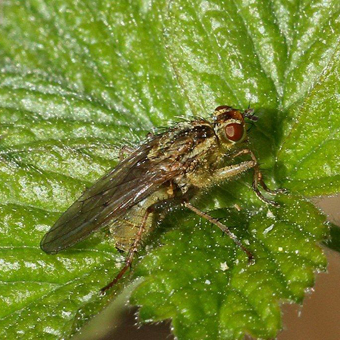
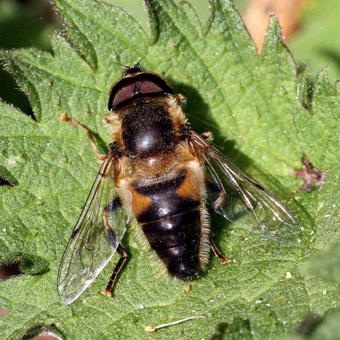
Left, possible Phaonia species and right, Hoverfly Eristalis pertinax both images Derek Bateson
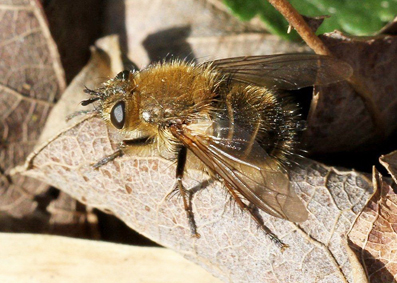
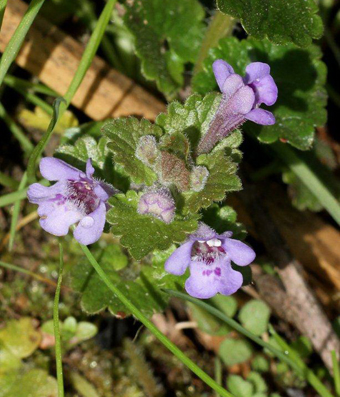
Left, Tachinid Fly Tachina ursina and right, Ground Ivy Glechoma hederacea © Derek Bateson