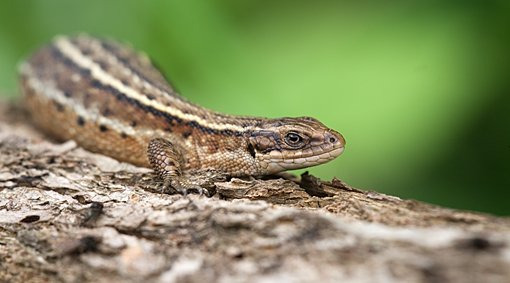
Common Lizard Lacerta vivipara © Allan Parker ARPS.
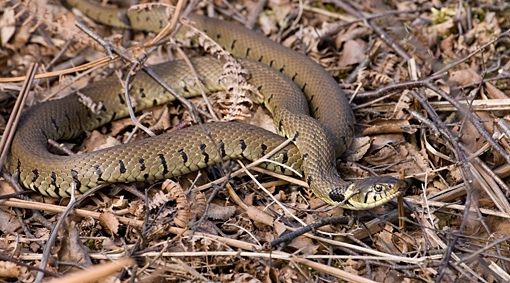
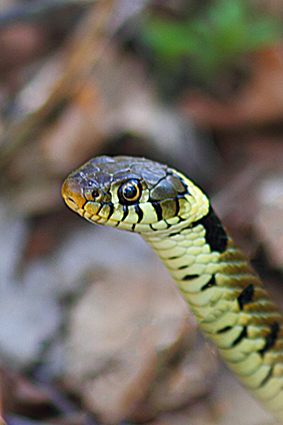
Left, Grass Snake Natrix natrix © Allan Parker ARPS and right, © Barry Wardley.
Amphibians
Some five species of amphibian are resident at Potteric Carr which is well-known for its colonies of the Great-crested Newt Triturus cristatus (protected under Schedule 5 of the Countryside and Wildlife Act 1981). Common (Smooth) Newt Triturus vulgaris probably occur in most waters but Palmate Newt Lissotriton helveticus is less frequently seen or reported.
Common Toad,
Bufo bufo
is perhaps surprisingly more in evidence than Common Frog
Rana temporaria,
and in mid-June literally thousands of toadlets can be seen on paths around some of the water bodies.
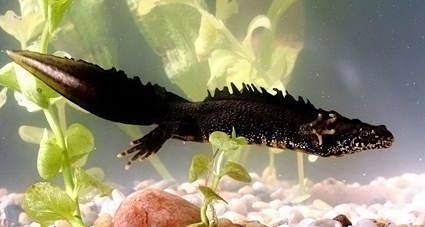
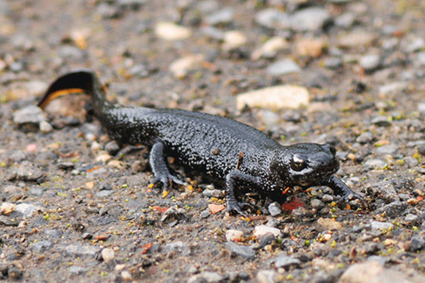
Left, Great Crested Newt Triturus cristatus male © Derek Bateson and right, female © Ray Schofield.
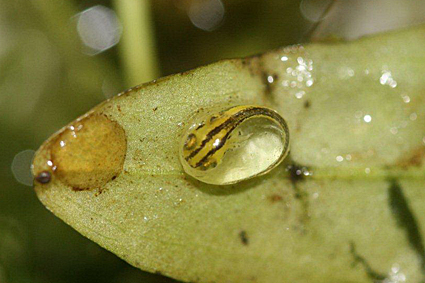
Great Crested Newt Triturus cristatus about to hatch from egg © Derek Bateson.
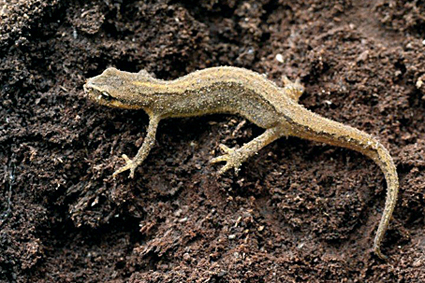
Smooth Newt Triturus vulgaris © Derek Bateson.
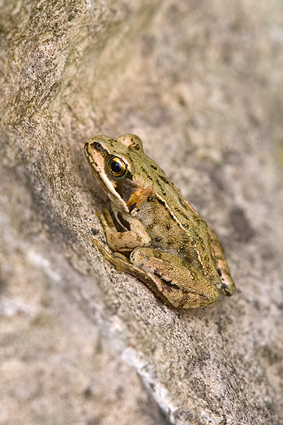
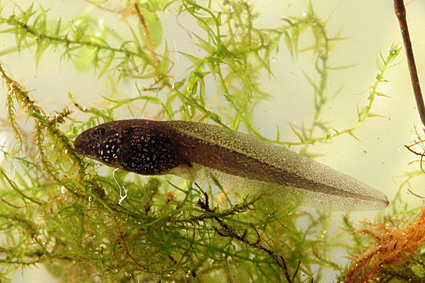
Left , Frog Rana temporaria © Allan Parker ARPS and right , tadpole © Derek Bateson.
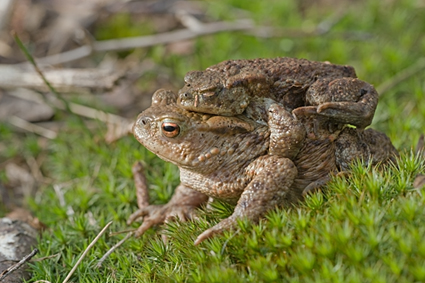
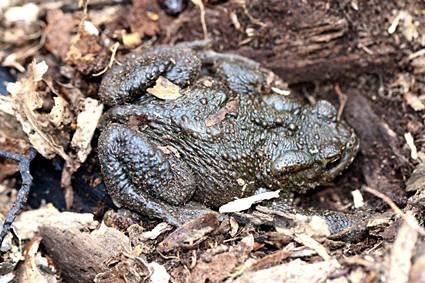
Left, Common Toad Bufo bufo mated pair © Allan Parker ARPS and right, adult hibernating © Derek Bateson.
Fish
These have not been extensively studied, but Mother Drain which runs right across the Reserve, carries shoals of Perch Perca fluviatilis , Chub Leuciscus cephalus , Roach Rutilus rutilus and the occasional Pike Esox lucius plus Eel Anguilla anguilla all of which are to be found in most of the open water areas of the Reserve, and are now extant in the newer areas of Huxter Well Marsh.
Of the smaller fish, Three-spined Stickleback Gasterosteus aculeatus and Nine-spined (sometimes called Ten-spined) Stickleback Pungitus pungitus are ubiquitous in all waters and provide a steady food source for Kingfisher Alcedo athis.
Gudgeon Gobio gobio and Stone Loach Noemacheilus barbatulus, have also been recorded on a few occasions.
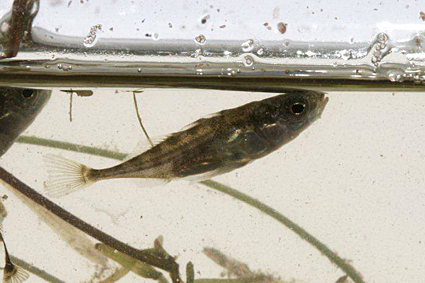
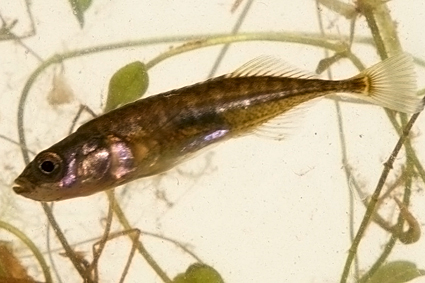
Left, Three-spined Stickleback
Gasterosteus aculeatus
and right, Nine-spined (Ten-spined) Stickleback
Pungitus pungitus
,
both images © Derek Bateson.
text © Derek Bateson